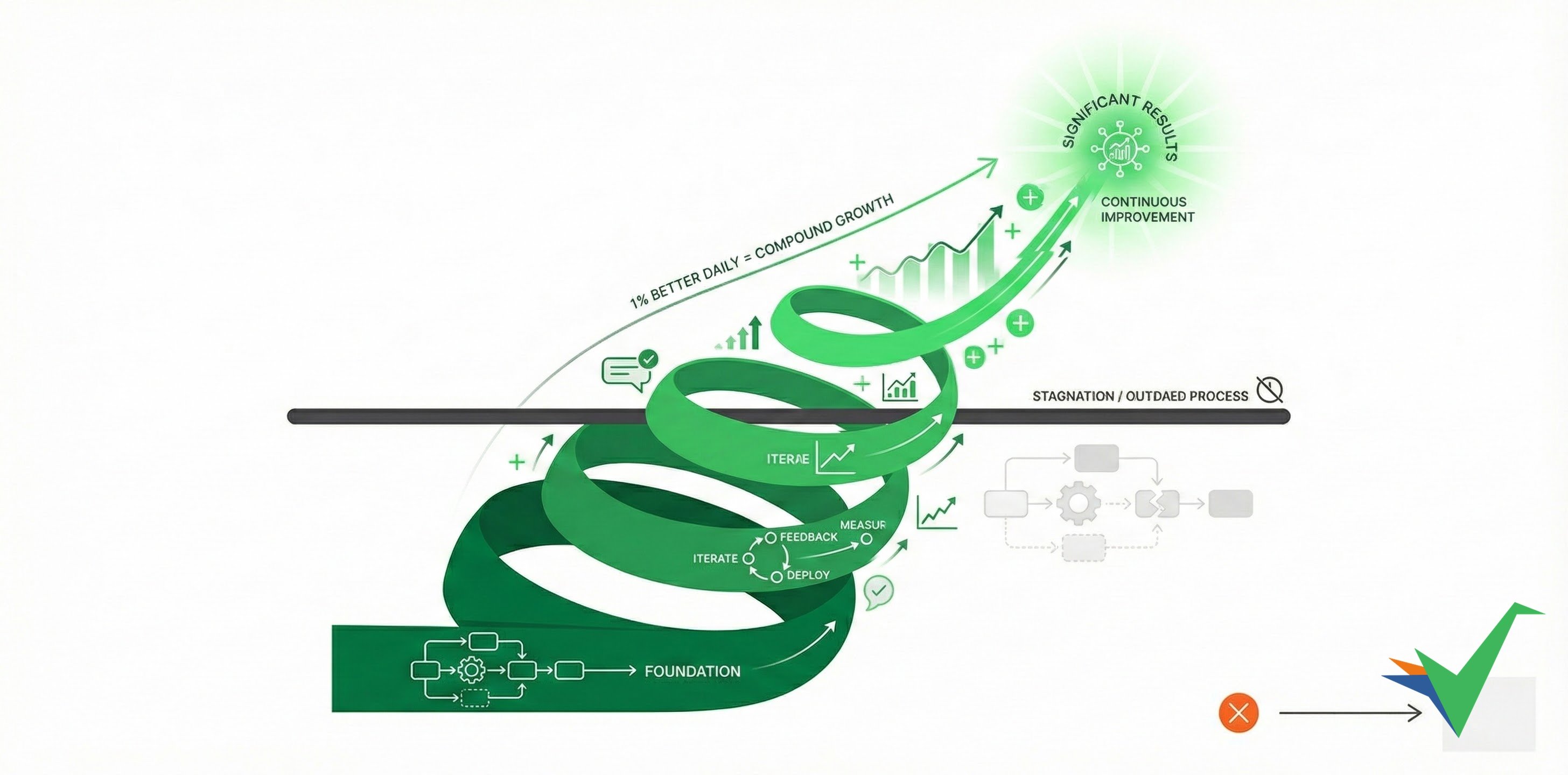
Tallyfy provides tools for ongoing process improvement through team feedback, analytics, and instant template updates.
The people doing daily tasks are your best source of improvement ideas:
Improvement comments : Use Tallyfy’s built-in comments to capture ideas directly within specific process steps.Structured feedback : Add feedback steps at the end of processes to collect suggestions regularly.Comment reactions : Team members can react to a comment with a thumbs up or another emoji. Each reaction shows a count, so you can see which suggestions have the most support.
Tallyfy’s comments let team members suggest improvements directly on specific tasks. This gives you context on exactly where and how a process can be improved - far better than generic feedback forms.
Customer satisfaction surveys : Collect feedback at key points in the customer journey.Service quality metrics : Track numbers like Net Promoter Score (NPS) or Customer Effort Score (CES).Support ticket analysis : Look for patterns in customer issues that point to process problems.Direct customer interviews : Talk to key customers about their experiences.
Focus on root causes, not symptoms. Late deliveries, for example, might signal issues in scheduling or fulfillment processes - not just shipping.
Process duration analysis : Use Tallyfy Analytics to spot which steps take longer than planned.Bottleneck identification : Find steps where work regularly gets stuck or delayed.Completion rate tracking : Monitor processes with low completion or high drop-off rates.Assignment analysis : Identify overloaded team members who might be causing delays.
State the problem : Define the issue the process change is meant to fix.Explain the impact : Show how the current process affects customers, team members, or results.Share the vision : Describe what the improved process will look like.Connect to values : Link the change to company values or strategic goals.
Consider methods like Kotter’s 8-Step Model or ADKAR (Awareness, Desire, Knowledge, Ability, Reinforcement). Structured approaches like these increase your chances of successful adoption.
Tallyfy’s template system makes rolling out improvements simple:
Instant updates : Changes to templates apply immediately - no complex versioning needed.Automatic rollout : The next process launched automatically uses the newest template version.No update windows : Make small changes anytime without scheduling downtime.No version sprawl : You won’t need to manage multiple versions of the same process.
Start small : Focus on minor improvements instead of huge overhauls.Compound benefits : Small improvements build on each other, creating big results over time.Reduce resistance : Smaller changes usually face less pushback.Learn continuously : Treat each small change as a learning opportunity for future improvements.
Process improvement : Making human tasks better by removing wasted effort, clarifying steps, or simplifying.Process automation : Taking people out of the loop entirely using tools like Robotic Process Automation (RPA) or API integrations.Hybrid approaches : Automating routine parts while improving the steps still done by people.
For any process step, ask these three questions in order:
Can we eliminate this step entirely?
If not, can we automate it?
If people must do it, how do we make it faster and less error-prone?
Steps that are good candidates for full automation typically:
Follow clear rules with specific criteria
Happen frequently or in large volumes
Are repetitive with little variation
Don’t require much judgment
Use structured data with clear inputs and outputs
Customer journey mapping : See how process changes affect the overall customer experience.Outcome metrics : Track customer-focused numbers like satisfaction, retention, or referrals.Value stream analysis : Check whether changes affect activities that create real customer value.Customer feedback loops : Ask customers directly about the impact of process changes.
Lean : Remove wasted effort and maximize value delivery.Six Sigma : Reduce variation and errors using data analysis.Kaizen : Make small, ongoing improvements continuously.PDCA (Plan-Do-Check-Act) : Test changes in small batches before full rollout.
Most organizations mix elements from different methods - and that’s fine.
Update Tallyfy templates : Make sure templates reflect the improved processes.Record lessons learned : Write down what worked, what didn’t, and why.Share success stories : Tell others in your company about improvements and their results.Create reusable patterns : Identify successful approaches that could work for other processes.
Standardize the core : Keep the main parts of a process standard for quality and compliance.Allow contextual variation : Give teams flexibility to adapt to unique situations.Define decision boundaries : Clarify where judgment is okay and where standards must be followed.Review exceptions : Monitor when standard processes get bypassed - that’s often where improvement opportunities hide.
Process mining : Use tools to discover how processes actually run based on system data.Cross-functional input : Get perspectives from different roles when designing improvements.Pilot testing : Test big changes on a small scale before full rollout.Regular review cycles : Schedule process reviews instead of waiting for problems to surface.Training : Make sure teams understand and can perform improved processes.Recognition : Acknowledge team members who suggest good improvements.